Facial ageing can lead to changes in skin firmness, facial contours and the appearance of the jawline and lower face. These changes are influenced by age, genetics, sun exposure and natural changes in facial tissues. For individuals seeking a surgical option, facelift surgery may help address selected signs of facial ageing.
Dr. Ankit Aggarwal, a plastic, reconstructive and aesthetic surgeon in Chandigarh, provides personalised consultations to help patients understand whether facelift surgery is appropriate for their concerns.
Book a Consultation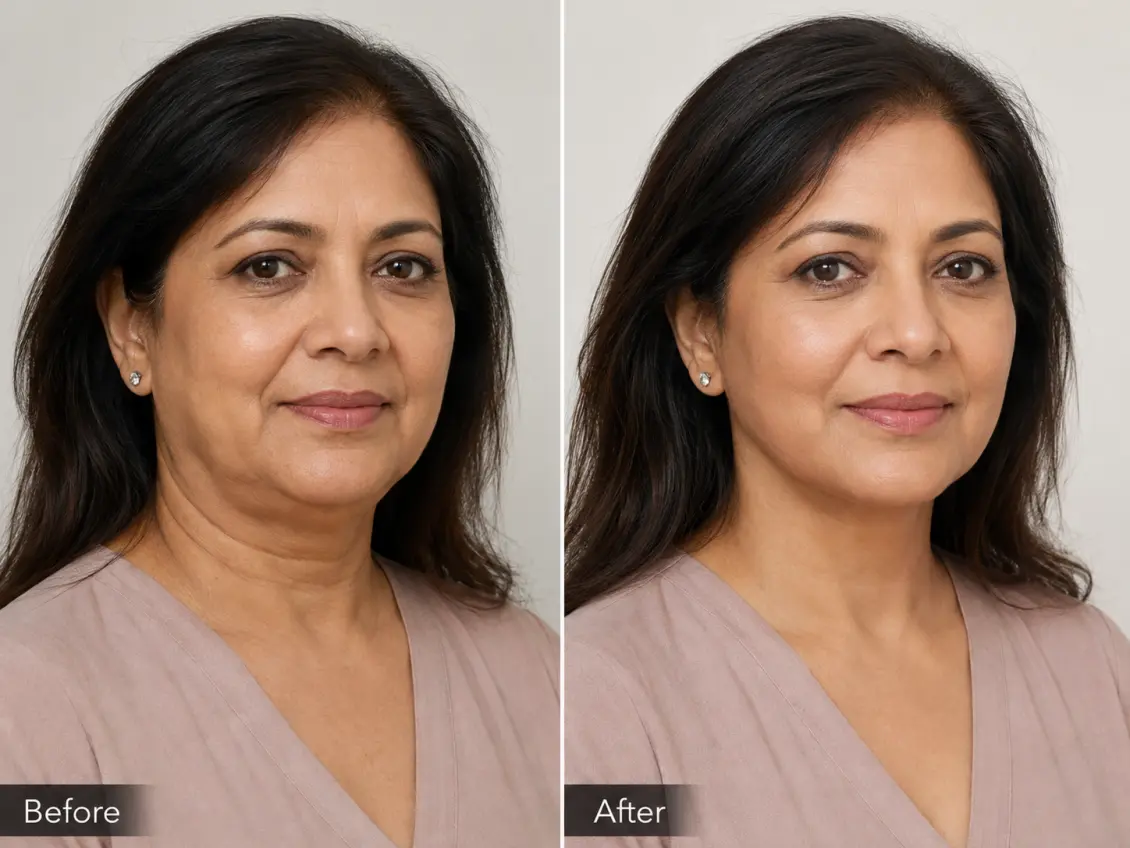
A facelift, also called rhytidectomy, is a surgical procedure designed to address selected age-related changes in the face, particularly around the cheeks, jawline and lower face. Depending on the surgical technique, underlying tissues may be repositioned and excess skin removed.
The aim is to create a facial contour that suits the patient's natural anatomy. A facelift does not stop the ageing process, and the outcome varies according to individual factors and the procedure performed.
Facelift surgery may be considered for:
A facelift does not usually address every facial concern. Eyelid changes, forehead lines, skin pigmentation and loss of volume may require separate assessment.
A facelift may be an option for adults who have visible facial sagging and want to discuss surgical treatment. Candidates should be in suitable general health and have realistic expectations about the results and recovery period.
A consultation is important for assessing facial anatomy, medical history, skin condition, medications and individual goals. Non-surgical treatments may be more appropriate for some people.
The surgical plan depends on the areas requiring treatment and the technique selected. Incisions are generally placed around the ears and, when necessary, within nearby hair-bearing areas to help keep scars less noticeable.
The surgeon may reposition underlying facial tissues, address selected excess skin and close the incisions carefully. The type of anaesthesia, procedure duration and surgical details are discussed during the preoperative consultation.
Swelling, bruising, tightness and temporary discomfort may occur after surgery. Recovery depends on the extent of the procedure and individual healing.
Patients should follow postoperative instructions, attend scheduled reviews and avoid strenuous activity until cleared by their surgeon. Scars and swelling continue to change as healing progresses, and the final result may take several months to settle.
Like other surgical procedures, a facelift carries potential risks, including bleeding, infection, scarring, changes in skin sensation, delayed healing and complications related to anaesthesia. The possibility of nerve injury and changes in facial movement should also be discussed.
A detailed consultation helps patients understand the benefits, limitations and risks before making a decision.
Dr. Ankit Aggarwal focuses on individualised aesthetic and reconstructive surgical planning. During a facelift consultation, patients can discuss their facial concerns, suitable techniques, expected recovery and the limitations of surgery.
Facelift surgery addresses selected signs of facial ageing, including loose skin and changes in the jawline and lower facial contours.
No. A facelift mainly addresses skin laxity and the position of facial tissues. Fine lines, skin texture, pigmentation and forehead wrinkles may need different treatments.
Results vary with the surgical technique, ageing process, skin quality and lifestyle. The face continues to age naturally after surgery, so results are not permanent.
Age alone does not determine suitability. The decision depends on the individual's anatomy, concerns, general health and expectations following a clinical assessment.
Discuss your facial ageing concerns and explore suitable treatment options with Dr. Ankit Aggarwal.