
Diabetes can damage nerves and affect blood circulation in the feet, increasing the risk of unnoticed injuries, slow-healing wounds and infections. Early treatment helps prevent complications and supports wound healing.
Dr. Ankit Aggarwal, a plastic, reconstructive and aesthetic surgeon in Chandigarh, provides consultations for diabetic foot complications, including wound management and selected reconstructive procedures.
Book a Consultation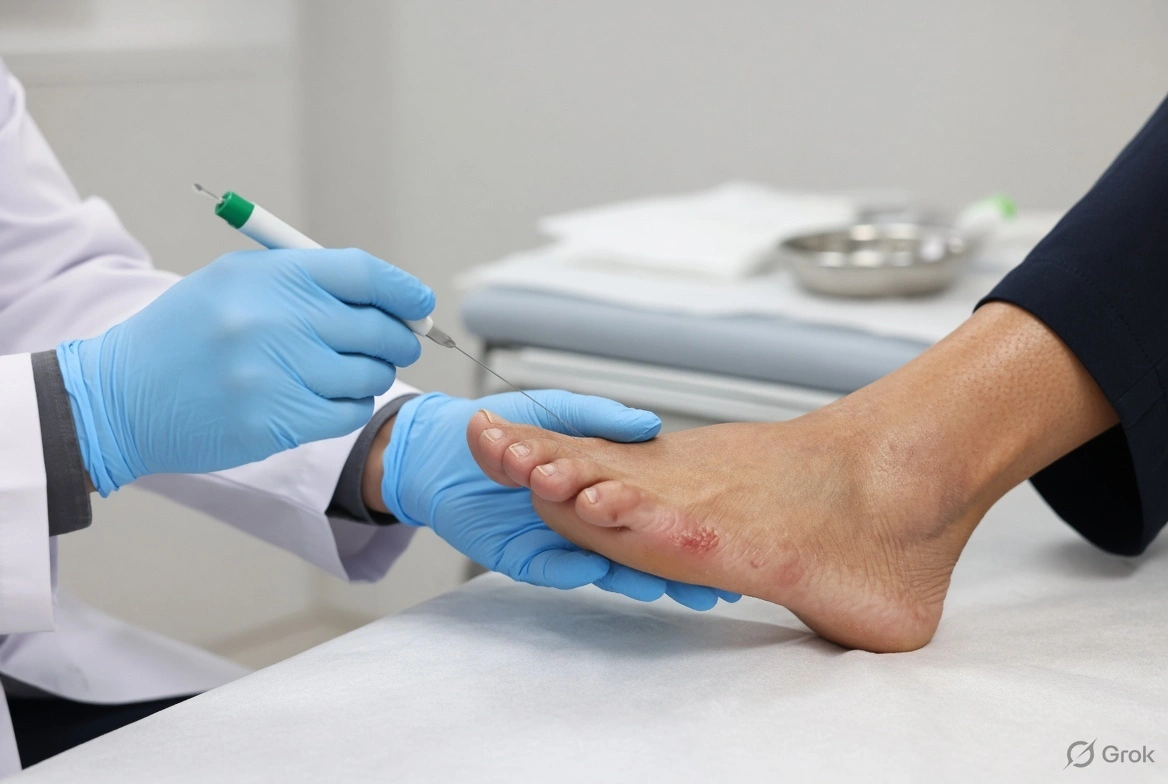
Diabetic foot disease includes foot ulcers, infections and tissue damage associated with diabetes. Nerve damage can reduce sensation, while poor circulation may delay healing.
Regular foot checks and timely medical care help reduce the risk of serious complications.
Open wounds caused by pressure, friction or injury that may become infected without proper treatment.
Infections affecting the skin or deeper tissues, sometimes including bone, that require prompt medical assessment.
Reduced circulation, elevated blood glucose and repeated pressure can delay wound healing.
Severe infection or inadequate blood supply can cause tissue damage and threaten limb health.
Seek medical assessment if you notice:
Severe infection, rapidly spreading redness or blackened tissue requires urgent medical attention.
Wound cleaning, appropriate dressings and regular monitoring help support healing.
Suitable footwear and offloading devices may reduce pressure on affected areas and prevent further injury.
Treatment may include antibiotics and removal of infected tissue, depending on the severity of the infection.
Debridement removes dead or infected tissue when necessary to manage complicated wounds.
Selected complex wounds may require reconstructive procedures to cover exposed tissues and support limb preservation.
Dr. Ankit Aggarwal's practice includes plastic and reconstructive surgical care for selected diabetic foot complications. Patients can discuss wound management, infection treatment and reconstructive options based on their clinical condition.
Yes. Some ulcers heal with appropriate wound care, pressure relief and management of underlying conditions. Complex wounds may require surgery.
Nerve damage, poor circulation, infection and elevated blood glucose can delay healing.
Surgery may be needed for deep infections, dead tissue or complex wounds requiring reconstruction.
Severe infection or extensive tissue damage can sometimes require amputation. Early treatment may help reduce this risk.
Seek timely medical assessment for diabetic foot wounds to help prevent complications. Contact Dr. Ankit Aggarwal to discuss suitable treatment options.